Chêne des garrigues
Quercus coccifera : Le Chêne des garrigues, Chêne kermès ou Quercus coccifera est une espèce d’arbustes à feuilles persistantes de la famille des Fagacées et de la sous-famille des Fagoideae, spontané dans les terrains pierreux calcaires de la région méditerranéenne, en particulier dans la garrigue.
Il a également pour noms communs Chêne à cochenille, Chêne-garrigue, Garric.
En occitan, il est appelé Avaus, Garrolha, Agarrus, Garric (ce dernier nom est issu du terme garrigue, littéralement l’arbre de la garrigue).
Le Chêne kermès tire son nom de la cochenille qui le parasite, Kermes vermilio (de l’arabe qirmiz (قرمز), du persan qirmiz (قرمز) : sanglant ; rouge ; cochenille). Quercus coccifera sur Wikipédia (fr)
Quercus coccifera : Quercus coccifera, commonly known as kermes oak, holly oak, or Palestine oak, is an evergreen oak shrub or tree in section Ilex of the genus. It has many synonyms, including Quercus calliprinos. It is native to the Mediterranean region and Northern African Maghreb, south to north from Morocco to France and west to east from Portugal to Cyprus and Turkey, crossing Spain, Italy, Libya, the Balkans, and Greece, including Crete. The Kermes oak was historically important as the food plant of Kermes scale insects, from which a red dye called crimson was obtained. The etymology of the specific name coccifera is related to the production of red cochineal (crimson) dye and derived from Latin coccum which was from Greek κόκκος, the kermes insect. The Latin -fera means ‘bearer’. Quercus coccifera sur Wikipédia (en)
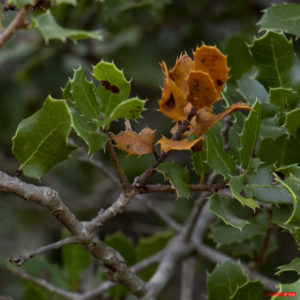
Chêne des garrigues 1911-105 Etang du Pourra, Saint-Mitre-les-Remparts. Novembre 2019.
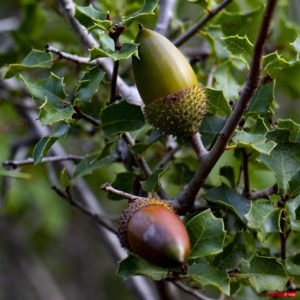
Chêne des garrigues 1911-104 Etang du Pourra, Saint-Mitre-les-Remparts. Novembre 2019.
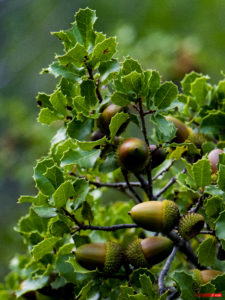
Chêne des garrigues 1911-103 Etang du Pourra, Saint-Mitre-les-Remparts. Novembre 2019.
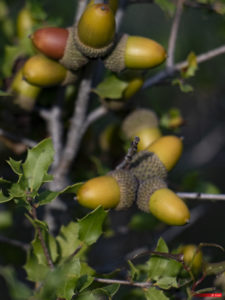
Chêne des garrigues 1911-102 Etang du Pourra, Saint-Mitre-les-Remparts. Novembre 2019.
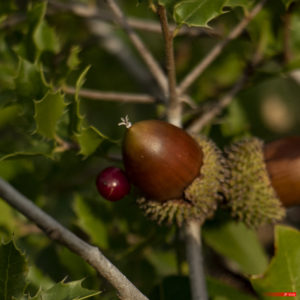
Chêne des garrigues 1911-101 Etang du Pourra, Saint-Mitre-les-Remparts. Novembre 2019.